
Minnesota Heat Wave: How to Protect Your Lawn & Landscape During Extreme Heat
When temperatures climb, rain stays away, and smoky skies settle over Minnesota, it’s not just people who feel the effects. Lawns, trees, shrubs, perennial gardens, and container plantings all experience increased stress during prolonged heat. While we can’t control the weather, we can help our landscapes become more resilient. At biota Landscapes, our horticulture team is closely monitoring conditions and encouraging homeowners to prioritize one of the most important summer maintenance tasks: proper watering.
Why Deep Watering Matters
One of the biggest mistakes homeowners make during a heat wave is watering too often for too little time. Frequent, shallow watering encourages roots to stay near the soil surface, making plants even more vulnerable to heat and drought. Instead, water deeply and thoroughly. Deep watering encourages roots to grow farther into the soil, creating stronger, healthier plants that are better equipped to handle future dry periods.
Lawn Watering During a Minnesota Heat Wave
Recent heat has placed significant stress on lawns throughout the Twin Cities.
To help your lawn recover:
- Apply 1 to 1.5 inches of water per week
- Divide watering into 2 to 3 deep watering sessions
- Water between 4:00 AM and 8:00 AM, to minimize evaporation
- Avoid nighttime watering whenever possible to reduce fungal disease
- Water long enough for moisture to soak into the soil without creating standing water
A deep soak is always more effective than several quick sprinkler cycles.
Watering Trees & Shrubs
Trees and shrubs require slower, longer watering than lawns.
- Rather than spraying the leaves, place water at the base of the tree beneath the canopy where the feeder roots are located.
- Allow a slow drip from your hose for 30 to 60 minutes, moving the hose every 15 minutes to distribute moisture evenly.
- Tree watering bags are another excellent option during extended dry weather. You can watch this video from the City of St. Paul on how to use a tree watering bag by clicking here.
Newly Installed Trees & Shrubs
Freshly planted material is especially vulnerable. General watering schedule:
- Weeks 1-2: Water daily
- Weeks 3-12: Water every 2-3 days
- After 12 weeks: Water weekly until fully established
During excessive heat, newly installed plants should be checked every day and watered whenever the soil begins drying out.
Perennials & Shrubs
Perennials benefit from slow, consistent watering directly at the root zone.
As a general guideline:
- Perennials: Slow count to 10 per plant
- Shrubs: Slow count to 25
- Avoid spraying foliage whenever possible. Wet leaves can encourage fungal diseases, while water delivered directly to the soil reaches the roots where it’s needed most.
- Plants in shade generally require watering two to three times per week.
- Plants growing in full sun or competing with mature trees may require watering three to four times each week.
Container Gardens & Patio Pots
Container plantings dry out much faster than landscape beds.
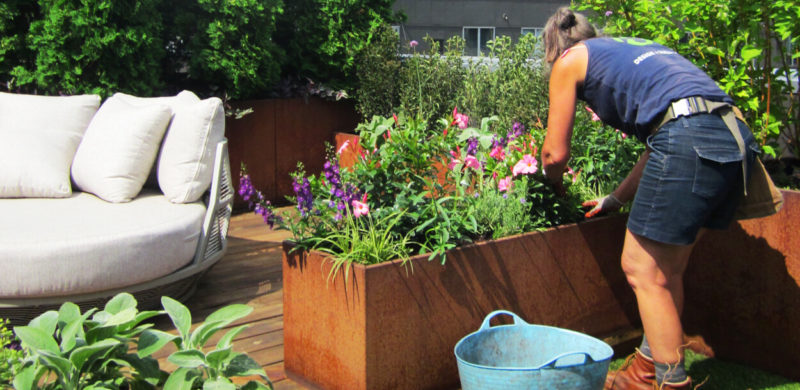
During periods of excessive heat:
- Check containers every day
- Water slowly until moisture drains from the bottom
- Large decorative pots may require watering daily
- Morning watering is best
How to Know If You’re Watering Enough
Every landscape is different.
- One of the easiest ways to check is by pulling back a small section of mulch and inserting your finger or a pencil into the soil.
- The soil should feel moist roughly 6 inches deep but should never be muddy or saturated.
- If the soil is already wet, wait before watering again.
A Healthy Landscape Starts With Consistent Care
Heat waves are temporary, but the way we care for our landscapes during stressful periods has lasting effects. Consistent watering now helps protect the investment you’ve made in your landscape while encouraging stronger roots and healthier plants for years to come. Whether your landscape was installed this spring or has been growing for decades, thoughtful stewardship today creates a more resilient landscape tomorrow. If you’d like expert guidance or ongoing landscape maintenance, the biota Landscapes horticulture team is here to help.
Visit biotalandscapes.com to learn more about our Design, Build, and Lifetime Care services.